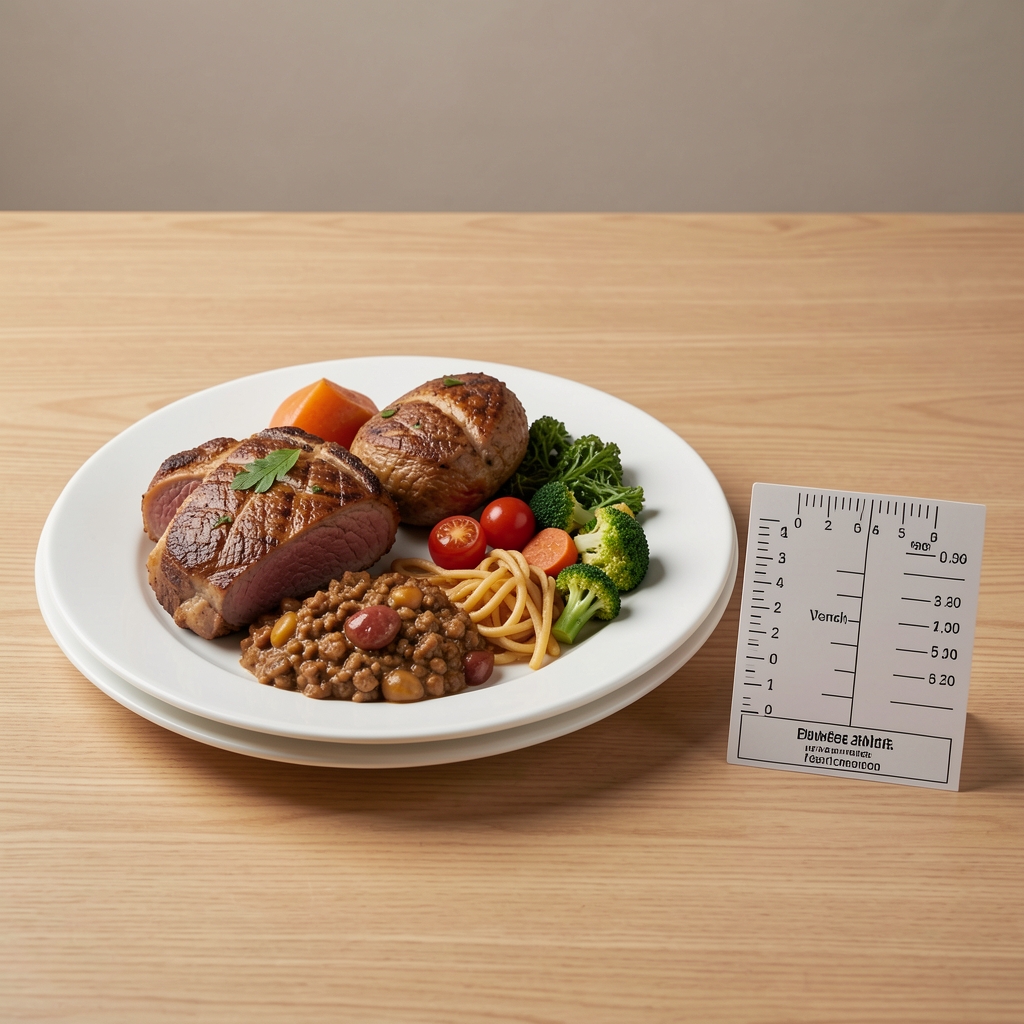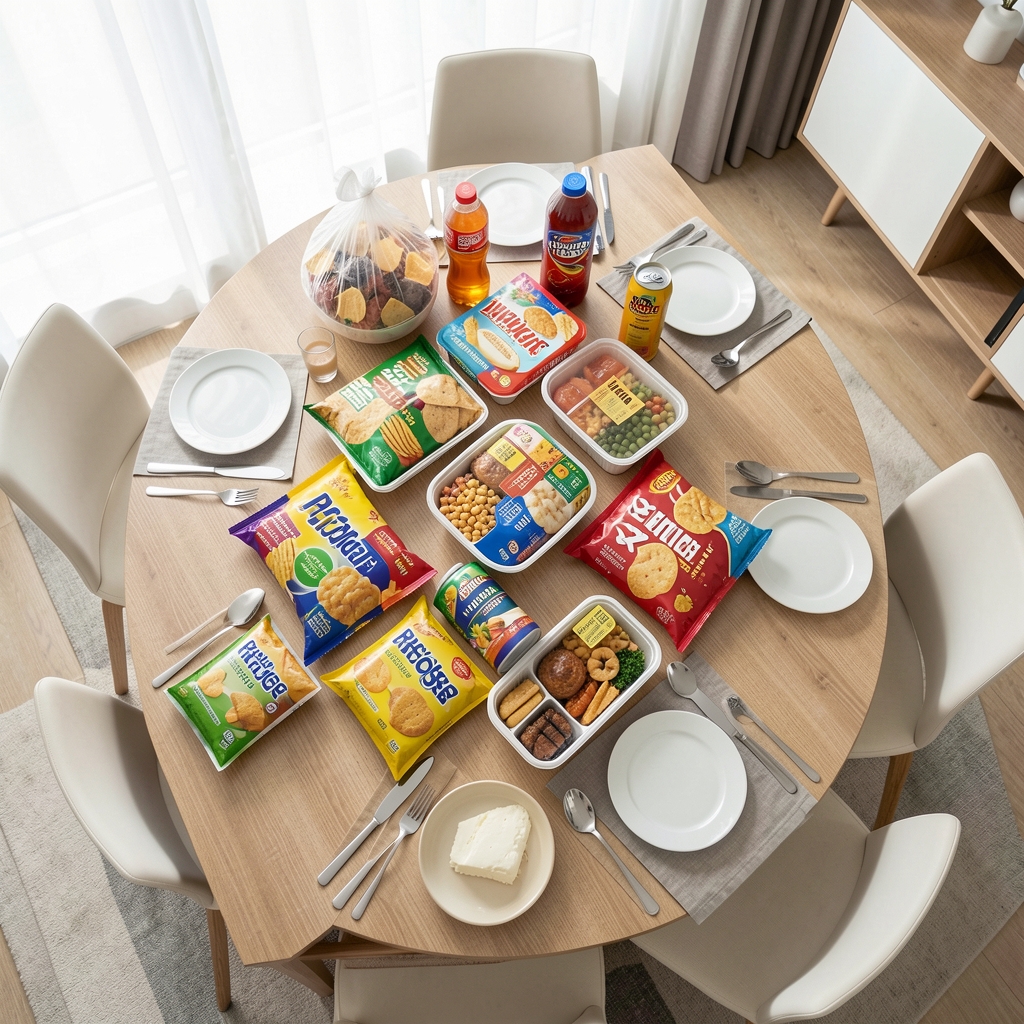
The prevalence of processed and ultra-processed food in UK household diets has been documented extensively across nutritional epidemiology literature over the past two decades. What the literature records, however, is not simply a question of availability — it is one of structural habit formation, time allocation, and the gradual normalisation of convenience food as a dietary default rather than an occasional supplement.
Defining Convenience Food Reliance
The term "convenience food" encompasses a broad spectrum of products: shelf-stable ready meals, frozen prepared entrees, packaged snack items, fast food purchases, and delivery service orders. Within nutritional research, a more precise classification system — the NOVA framework — categorises these under the umbrella of ultra-processed foods (UPFs), defined primarily by their degree of industrial processing and the presence of additives absent from domestic culinary practice.
Reliance, in this context, refers to a frequency threshold: the point at which convenience food constitutes the majority of an individual's weekly caloric intake. Published research consistently identifies four or more convenience food occasions per week as the threshold at which the dietary profile begins to diverge significantly from recommended nutritional targets — in sodium, added sugar, refined carbohydrate, and saturated fat content simultaneously.
In the UK, population-level survey data collected through the National Diet and Nutrition Survey (NDNS) indicates that approximately 57% of adult caloric intake derives from ultra-processed food sources, placing England consistently among the highest UPF-consuming populations in Europe. The figure rises to 65% in the 19-35 age bracket and is positively correlated with urban residence, single-person household composition, and extended working hours.
The Structural Drivers of Convenience Dependency
An important distinction in the research literature is between convenience food consumption that is driven by preference and consumption that is driven by structural constraint. Time pressure is the most extensively documented structural driver: a 2023 systematic review published in Public Health Nutrition found that time available for food preparation was the single strongest predictor of UPF consumption frequency across 14 European countries, outperforming income, food literacy, and geography.
The implication is significant: many individuals consuming convenience foods at high frequency are not doing so because they prefer processed food to freshly prepared alternatives, but because their working schedules, commuting patterns, and household configurations leave insufficient time for regular home cooking. This structural framing is relevant to how the issue is analysed — frequency data alone does not distinguish between preference-driven and constraint-driven reliance.
Additional structural factors documented in the literature include the proximity and density of fast food outlets relative to residential and workplace locations, the price differential between convenience products and equivalent fresh ingredients, and the increasing portion size standardisation in the packaged food sector, which makes accurate caloric estimation difficult without explicit label analysis.
"The research consistently finds that convenience food frequency is better predicted by time allocation and environmental food access than by nutritional knowledge or stated dietary preferences."
Ready-Meal Reliance — A Specific Sub-Pattern
Within the convenience food category, ready meals occupy a specific position: they are nutritionally profiled differently from street food, fast food, or snack items, yet their consumption follows a distinct behavioural pattern. Ready-meal reliance — defined as the use of packaged, fully prepared refrigerated or frozen meals as the primary evening meal on four or more occasions per week — is associated with specific nutritional shortfalls.
Sodium content is the most consistently documented concern. A 2022 compositional analysis of 486 UK supermarket ready meals found mean sodium content of 1.8g per portion, equivalent to approximately 30% of the recommended daily maximum in a single serving. Across a week of high ready-meal frequency, cumulative sodium loading exceeds recommended targets by a factor of two to three, with compounding effects observed in individuals who also consume high-sodium snack products.
Fibre content presents the inverse problem: ready meals are consistently low in dietary fibre compared to home-prepared equivalents, with the compositional analysis referenced above recording mean fibre content of 2.1g per ready-meal portion versus an estimated 5.4g in matched home-prepared recipes. This shortfall accumulates across a week of high-frequency ready-meal consumption into a substantial fibre deficit.
The Fast Food Frequency Variable
Fast food consumption introduces a different variable set from ready-meal reliance. Portion sizes in the fast food context are more variable, pricing incentives (meal combinations, upsizing) actively drive caloric loading above stated portion parameters, and the social context of fast food consumption — typically away from home — removes the reference cues (plate size, food volume relative to container) that assist with portion calibration.
Research examining eating rate data from fast food restaurant settings finds that consumption speed in these environments is measurably faster than in home or sit-down restaurant contexts — a factor relevant to satiety signalling, given that the physiological response to caloric intake requires approximately 15-20 minutes to register. At fast food consumption speeds, this signalling lag translates directly into measurable overconsumption before satiety feedback arrives.
Frequency data from the UK Health Survey indicates that 38% of English adults consume fast food at least once per week, with 14% consuming it three or more times per week. In the latter group, fast food contributions to weekly caloric intake average between 28% and 34% — a proportion sufficiently large to influence overall dietary quality metrics across the week.
Cooking at Home — The Documented Dietary Contrast
The strongest comparative data on the nutritional benefits of home cooking comes from longitudinal dietary survey studies rather than short-term intervention research. These studies compare self-reported home cooking frequency with dietary quality indicators across multi-year follow-up periods, controlling for confounding variables including income, household composition, and nutritional literacy.
Consistent findings across these studies include: home-cooking frequency is positively correlated with higher dietary diversity scores, lower mean sodium intake, higher mean fibre intake, and more accurate self-reported portion size estimation. The relationship holds across income levels, which is relevant to the policy framing of home cooking as a resource-intensive practice — the research suggests that frequency of home cooking is a more reliable predictor of dietary quality than disposable income, particularly when controlling for time availability.
- Home-prepared meals record an average of 38% less sodium than matched ready-meal equivalents
- Cooking frequency above 4 meals per week correlates with 22% higher dietary diversity scores in UK NDNS data
- Individuals preparing the majority of their own meals report more accurate portion size estimation in calibration studies
- Ingredient familiarity through regular cooking reduces the probability of unintentional caloric excess from hidden preparation ingredients
- Regular home cooking maintains a practical awareness of ingredient composition that external food purchases routinely obscure
Gradual Improvement — The Evidence-Informed Approach
The research literature on dietary change consistently identifies gradual, incremental substitution as the approach with the highest long-term adherence rates, significantly outperforming comprehensive dietary overhauls. The relevant evidence base draws from behavioural economics, habit formation research, and nutritional intervention studies to construct a consistent picture: small, repeated changes within existing routines are more durable than large, disruptive alterations.
In the context of convenience food reliance specifically, the most evidence-supported incremental approach involves systematic substitution rather than elimination — replacing one convenience meal per week with a home-prepared equivalent for several weeks before introducing further changes. This approach respects the structural constraints that drive reliance while progressively reducing its frequency, without requiring wholesale changes to time budgets or lifestyle organisation.
The practical documentation of this approach — tracking which convenience meals are replaced, monitoring whether the substitution is maintained across varied weekly circumstances, and adjusting the pace of change to match available preparation time — constitutes a straightforward self-auditing process compatible with any baseline frequency of convenience food use.
Key Takeaways
- UPF consumption accounts for approximately 57% of adult caloric intake in the UK, among the highest rates in Europe
- Time availability is the strongest predictor of convenience food frequency, ahead of income or nutritional knowledge
- Ready-meal reliance at high frequency introduces systematic sodium excess and fibre shortfalls
- Fast food consumption speed removes satiety calibration cues, contributing to consistent overconsumption
- Home cooking frequency at four or more sessions per week correlates with measurable improvements across multiple dietary quality indicators
- Incremental substitution — one convenience meal replaced per week — is the most evidence-supported approach to gradual dietary improvement