Processed Food Patterns
Convenience Foods and the Architecture of Everyday Reliance
Eleanor Whitfield
·
Published research consistently identifies a 15–20 minute lag between the start of eating and the registration of satiety signals. This window, largely unaccounted for in habitual fast-eating patterns, represents one of the more precisely documented mechanisms behind unintended caloric surplus in everyday routines.
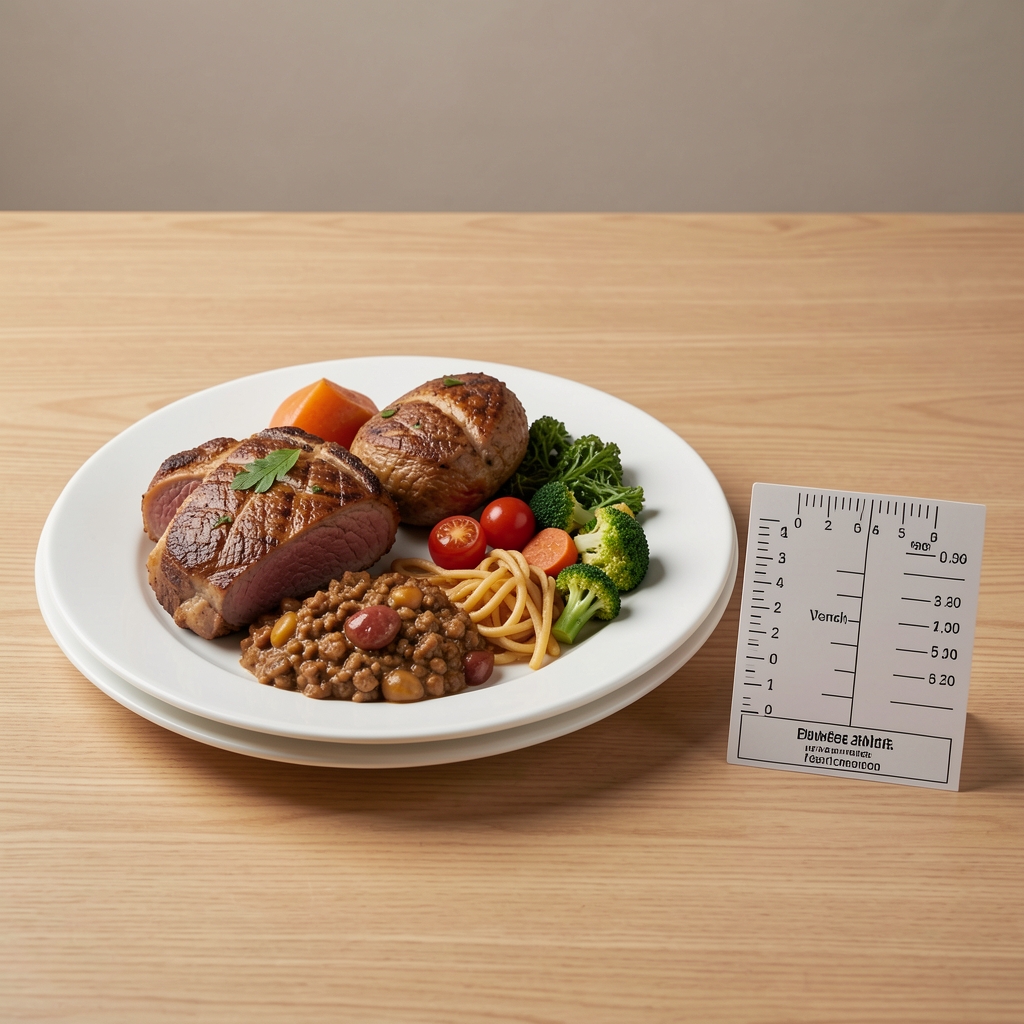
Field notes — London, 2026 · Portion analysis, batch 03
The physiological process by which the body registers a full stomach involves a sequence of physiological and neural responses that takes considerably longer than most eating sessions last. Gut-derived peptides including cholecystokinin and glucagon-like peptide-1 require time to accumulate to signalling thresholds. Peer-reviewed studies in nutritional science have placed this lag at between 15 and 20 minutes from the onset of food consumption in controlled eating conditions.
In practice, this means that an individual eating at a pace that clears a standard UK restaurant portion in under 12 minutes has consumed the full serving before any reliable fullness signal has reached effective registration. The result, documented across multiple cohort studies, is a consistent tendency to consume additional food during the lag window — whether through second helpings, supplementary snacks, or continuation of eating past the point at which the body would otherwise have signalled adequacy.
This mechanism is not a character attribute or a failure of self-regulation. It is a measurable physiological timing mismatch between the pace of modern eating and the pace of the satiety feedback loop. Understanding it as a documented biological lag rather than a behavioural flaw is a prerequisite for addressing it in any practical sense.
The concept of portion distortion refers to the gradual recalibration of what an individual considers a normal serving size, driven primarily by prolonged exposure to above-standard portion volumes. Research into this pattern draws on data from food service industry portion increases tracked across several decades: the average restaurant entree in the UK has increased in caloric content by an estimated 20–35% since the early 1990s, with plate sizes having increased in parallel.
When a person's daily reference point for a normal portion is a restaurant-sized serving, home-prepared meals at objectively appropriate portion sizes can register as insufficient even before consumption begins. This perceptual shift is not a transient effect; studies tracking participants over 12-month periods found that portion calibration recalibrated slowly, with visual estimation of appropriate quantities remaining above reference standards throughout.
"Individuals exposed to consistently oversized reference portions for 6+ months demonstrate statistically significant upward drift in self-estimated adequate serving sizes across all food categories."
Published nutritional research synthesis · Oratelin Journal editorial review
The practical consequence of this perceptual shift is that volume-based self-regulation — the intuitive approach most people rely on — becomes unreliable as a calibration tool once distortion has occurred. Individuals who have spent extended periods consuming above-reference portions are not well-positioned to use internal cues alone to identify appropriate intake. The distortion is, by definition, invisible to the person experiencing it, as it has rewritten what feels normal.
Eating rate is not solely a function of individual habit. A range of environmental variables have been associated with accelerated consumption pace across published research. Desk eating — consuming a meal at a workstation during a working day — is among the most consistently identified. Studies comparing lunch eating pace at desks versus designated dining areas found measurable pace increases of 15–25% in desk-eating conditions, attributed to divided attention and implicit time pressure.
Screen exposure during meals represents a related variable. The attentional demand of a screen — whether television, phone, or computer — diverts cognitive resources from the eating experience itself. Research in this area notes that reduced attention to the act of eating is correlated with reduced awareness of pace, reduced responsiveness to taste satiation, and reduced accuracy in post-meal recall of quantity consumed. The last of these findings has implications for total daily intake estimation, as individuals who eat while distracted consistently underestimate portion sizes relative to those who eat without concurrent screen use.
Social eating pace presents a more variable picture. Group dining has been associated with both increased and decreased pace depending on the composition and dynamics of the group. What research does consistently identify is that pace in social settings tends to converge toward the fastest eater present — a phenomenon sometimes termed pace mirroring — which has implications for household eating environments where pace habits vary between individuals.
Between-meal consumption that occurs in the absence of hunger signalling — commonly described as mindless snacking — is a distinct pattern from satiety-lag overeating, though the two frequently interact. Mindless snacking is primarily characterised by its association with environmental and routine triggers rather than hunger: the reflex of reaching for a snack when entering a kitchen, the habitual consumption of something during a specific television programme, the association of certain work tasks with particular snack items.
Research quantifying the caloric contribution of trigger-based snacking in UK adults places the average additional daily intake attributable to non-hunger-driven snacking at between 180 and 340 kilocalories — a range that, maintained over time, carries meaningful weight implications without any change in the composition of primary meals. The invisibility of this intake category to the individual consuming it is a function of the automaticity with which these behaviours occur; because they are not experienced as eating decisions, they are not subject to the evaluative processes that govern deliberate food choices.
The distinction between hunger-driven and trigger-driven consumption is practically significant because the two warrant different approaches. Hunger-driven eating is a signalling process that responds to adjustments in meal composition and timing. Trigger-driven consumption requires identification and gradual modification of the environmental associations that sustain it — a different process entirely, and one that is not addressed by changes to main meal composition alone.
The implication of the research reviewed across this article is not that eating behaviour is beyond adjustment, but that the adjustment of eating-related patterns — pace, portion calibration, trigger-driven snacking — is a structured process that does not respond well to abrupt, wholesale changes. The published literature on sustained dietary modification consistently identifies gradual, incremental adjustments as the approach with the strongest long-term adherence outcomes.
For pace specifically, research supports the utility of extending meal duration through deliberate structural changes: longer utensils, plating practices that distribute food across a larger surface area, and the removal of serving dishes from immediate reach during the eating period. Each of these interventions increases the likelihood that the satiety lag window is bridged before the available food is fully consumed.
For portion calibration, the most consistently supported approach in published research is the reintroduction of external reference points — measured volumes, weight-based references, or structured visual aids — during a period of recalibration, rather than reliance on intuitive assessment alone. This is not a permanent requirement; research suggests that recalibration to accurate internal reference points is achievable within several weeks of consistent external reference use, after which internal cues become reliable again.